Lick Granuloma in Dogs: Why It Develops and How to Stop the Licking
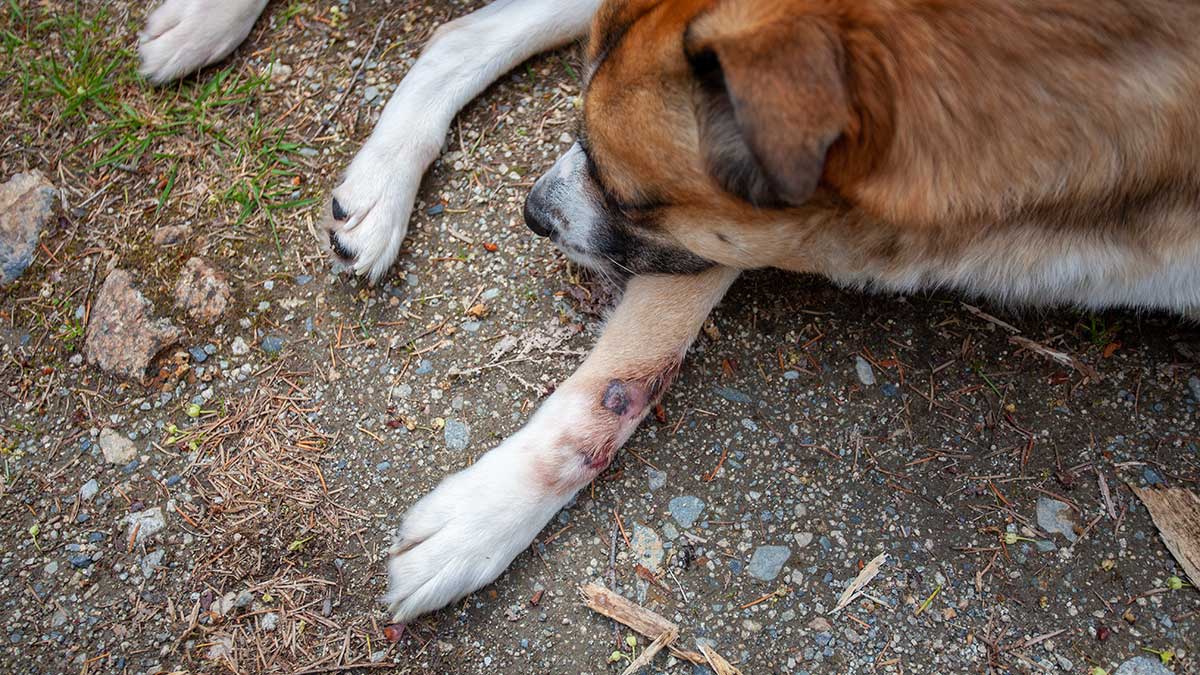
A lick granuloma develops when a dog repeatedly licks one area until the skin becomes inflamed, thickened, hairless, and sometimes ulcerated or infected. Stopping the licking requires more than covering the sore because successful care must identify and address the medical, physical, or behavioral trigger behind it.
A dog may begin licking because a spot hurts or itches, then continue after the original irritation fades. Each lick causes more tissue damage, which creates additional discomfort and drives the dog to lick again. This cycle can turn a small irritation into a stubborn lesion that needs veterinary attention.
What Is a Lick Granuloma?
A lick granuloma, also called acral lick dermatitis, is a chronic skin lesion caused by persistent licking. “Acral” refers to an extremity, which explains why these sores commonly appear on the lower part of a front leg, near the wrist, or around the ankle. The lesion often looks like a raised, oval patch with hair loss, redness, crusting, thickened skin, or an open surface.
Why Do Dogs Develop Lick Granulomas?
Dogs do not develop every lick granuloma for the same reason. A veterinarian needs to look beyond the visible sore because itching, pain, infection, and behavioral factors can overlap. Assuming boredom caused the problem may delay treatment for an allergy, orthopedic condition, foreign material, or another source of discomfort.
Could Itching or Skin Disease Start the Licking?
Allergies commonly cause dogs to lick their paws and legs. Environmental allergens, food-related reactions, parasites, contact irritation, and skin infections may create enough itching to start the cycle. Even after the original trigger improves, the dog may continue licking because the damaged area now feels irritated.
Could Pain Be Hiding Under the Skin?
Dogs sometimes focus on a leg because they feel pain beneath or near the lesion. Joint disease, an old injury, nerve discomfort, bone disease, or a small foreign object can lead a dog to lick one specific location. Skin care alone may provide temporary improvement without resolving the reason the dog keeps returning to that spot.
Can Stress, Anxiety, or Boredom Cause Compulsive Licking?
Emotional and environmental factors can contribute, especially when a dog lacks predictable activity, social interaction, or mental engagement. Household changes, separation-related distress, conflict with another pet, noise sensitivity, and frustration may increase repetitive behaviors. Licking may initially calm the dog, which reinforces the behavior and makes it harder to stop.
Veterinarians typically investigate physical causes before deciding that licking has a primarily behavioral origin. Some dogs experience multiple contributing factors at once, such as allergies combined with stress or a learned licking habit. Identifying each factor gives the treatment plan a better chance of succeeding.
How Does a Veterinarian Diagnose a Lick Granuloma?
Diagnosis begins with a medical history and physical examination. Your veterinarian will ask when the licking started, whether it happens at certain times, how quickly the lesion changed, and whether your dog has allergies, mobility changes, or recent stressors. Photos or videos of the licking behavior can reveal useful patterns.
Depending on the findings, testing may include:
- Skin cytology to look for bacteria, yeast, and inflammatory cells
- Skin scrapings or hair testing to investigate parasites or fungal disease
- A bacterial culture when infection appears deep or recurrent
- A biopsy when the lesion looks unusual or fails to respond
- X-rays or other imaging when joint, bone, or foreign-body pain is possible
- Allergy evaluation when itching affects other areas
A veterinarian may recommend several tests because chronic licking changes the skin’s appearance over time. An infected lick granuloma can look similar regardless of whether the original trigger involved allergies, pain, parasites, or stress. Testing helps the veterinary team treat the underlying problem rather than responding only to the visible wound.
What Does Lick Granuloma Treatment Involve?
Lick granuloma treatment usually combines several strategies because no single step solves every case. The plan may need to control infection, reduce inflammation or itching, manage pain, protect the lesion, and change the dog’s licking pattern. Long-standing lesions often require patience because thickened tissue and deep infection can heal slowly.
How Do Veterinarians Break the Lick Cycle?
Physical protection may keep a dog from reaching the area while treatment begins to work. Your veterinarian may recommend a properly fitted recovery collar or another veterinary-approved barrier based on the lesion’s location and your dog’s behavior. Removing protection too early can allow a dog to reopen a healing area quickly.
The veterinary team will also treat any identified medical trigger, such as infection, allergies, parasites, inflammation, or orthopedic pain. Behavioral support may become part of the plan when anxiety or a compulsive pattern continues after physical discomfort improves. The exact approach will depend on the lesion, test results, medical history, and the situations that prompt the dog to lick.
What Can You Do at Home During Veterinary Treatment?
Follow the treatment and recheck schedule closely, even when the lesion starts to look better. Dogs can continue damaging deeper tissue before owners see major changes at the surface. Contact the clinic if the barrier slips, the dog reaches the lesion, or the area develops swelling, discharge, odor, bleeding, or increasing pain.
Helpful management steps may include:
- Keeping veterinary-approved protective equipment in place
- Preventing unsupervised access to the lesion
- Following activity restrictions when pain contributes to licking
- Providing consistent exercise suited to the dog’s physical abilities
- Offering structured enrichment recommended for the individual dog
- Tracking licking attempts and sharing the pattern at rechecks
- Returning for follow-up testing when recommended
Avoid putting creams, sprays, wraps, or other products on the lesion unless your veterinarian directs you to use them. Some materials can trap moisture, irritate damaged skin, or interfere with healing. A dog may also chew or swallow anything applied to an accessible area.
When Should a Dog With a Lick Granuloma See a Veterinarian?
Schedule an examination when your dog repeatedly targets the same location, even if the skin still looks mildly irritated. Earlier care may prevent a superficial problem from becoming a thick, painful lesion. Seek veterinary attention for hair loss, bleeding, discharge, odor, swelling, limping, sensitivity, or a sore that keeps returning.
Prompt care matters when your dog appears unable to settle, damages the skin rapidly, or shows signs of significant pain. A lick granuloma rarely resolves while a dog continues licking it. Delaying evaluation gives the cycle more time to become physically and behaviorally established.
Can a Lick Granuloma Come Back?
Recurrence can happen when an underlying trigger remains active or the dog resumes a learned licking habit. Seasonal allergies, chronic joint discomfort, stressful events, or inconsistent lesion protection may restart the cycle. Regular rechecks help the veterinarian adjust the plan before a small setback becomes a major wound.
Watch the previously affected area after it heals. Early signs may include saliva staining, thinning hair, or brief but repeated licking sessions. Reporting those changes promptly may make the next stage of care easier to manage.
Get Help for Persistent Licking at Bulverde Animal Hospital
A sore that your dog will not leave alone deserves a closer look. Dr. Richardson and the team at Bulverde Animal Hospital can evaluate the skin, investigate possible medical and behavioral triggers, and create a lick granuloma treatment plan based on your dog’s needs.
Call (830) 438-7200 or request an appointment online if your dog keeps licking one area, has developed a recurring lesion, or needs follow-up care for a diagnosed lick granuloma.
Recent Posts
About Us
At Bulverde Animal Hospital, our ultimate goals are excellent service to clients, personal growth, and the professional development of our staff. We are a small clinic creating a significant impact on pets' lives.